
Health App for Internet Gaming Disorder.
GAIR is the first mobile experience designed to help individuals identify early signs of gaming addiction. My interest in this topic began after witnessing problematic gaming in my own family, which helped me approach the challenge with empathy while grounding all design decisions in academic research, user interviews and validated scientific criteria such as the IGD 20 Test. This project began as my MSc UX Design final project and later evolved into a social enterprise.
IOS App
MVP
B2C
Landing page

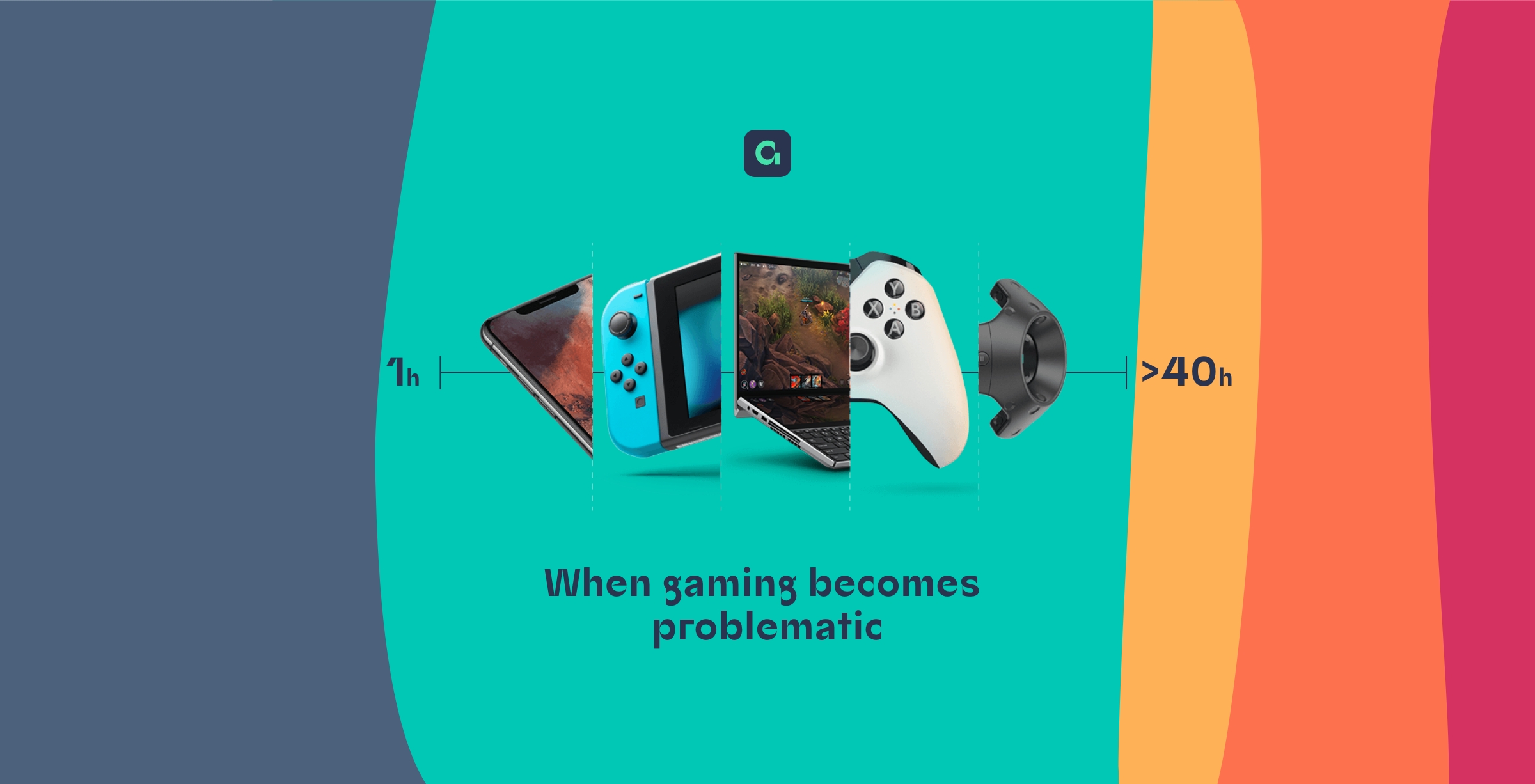
I led the project end to end as UX designer, product designer, product owner and founder. I worked closely with an iOS developer, partnered with a gaming addiction research specialist and received strategic business support from a mentor at the Cambridge Social Ventures Incubator.
2017 – 2020
Internet games are currently one of the most popular leisure activities and hobbies worldwide. Video games provide mental stimulation and education. People use games to learn languages, programming, recover after a stroke,
find friends, exercise, relax, etc. Along with this growth in population, there is increasing concern over high hours of gaming per week. Some individuals may use games excessively but non-problematically but another may experience significant impairment in their daily life as a consequence.
The brief was to create an intuitive digital health app allowing those who feel their gaming is problematic to receive guided help on their own phone.
I delivered a research informed product direction, complete UX foundation and a launched MVP that enabled users to assess their gaming behaviour using the IGD 20 Test. The project earned a place in two competitive social enterprise incubators, one of which provided initial funding to support early development and business planning. It progressed to a validated test experience, a public landing page for grant applications and a fully developed business model. Although development of the full recovery product was paused due to funding limitations and the COVID pandemic, the project validated user need, strengthened the scientific grounding of the concept and established a strong foundation for future development.

When I began this project, problematic gaming was not formally recognised as a disorder and public understanding was very limited. The gaming industry was rapidly growing, generating billions in revenue and employing sophisticated behavioural psychology techniques to keep players engaged. Yet very few people were addressing how excessive gaming affects children, adolescents and adults, or where healthy gaming ends and addiction begins.
Gamers often lacked awareness of their own habits. Families struggled to recognise early signs and did not know where to find reliable guidance. Health professionals had research based frameworks, but no accessible tools to support public self assessment.
The challenge was to translate complex scientific criteria into a simple and empathetic mobile experience that could educate, assess and empower users without judgement. Constraints included limited resources, the sensitivity of the mental health topic and the need to build credibility in a space where many people did not believe excessive gaming could be harmful.
Research: IGD research, user research, lightweight personas, and PWA research
Prototype: Wireframes and mockups
Mobile web app development: Design style guides, formative testing, and development
App Store launch: iTunes marketing and App Store submission
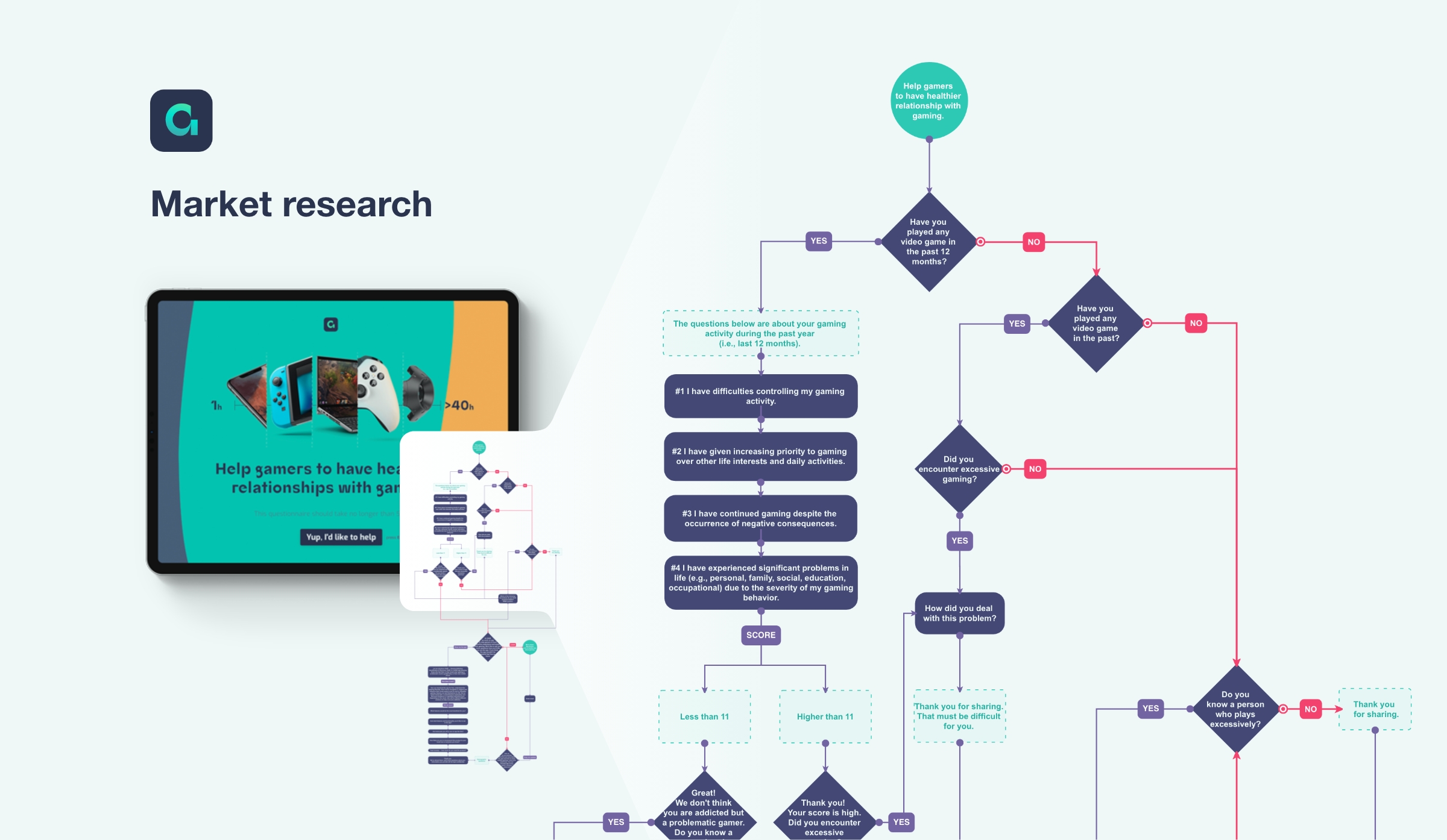
Market survey
Recovery program development
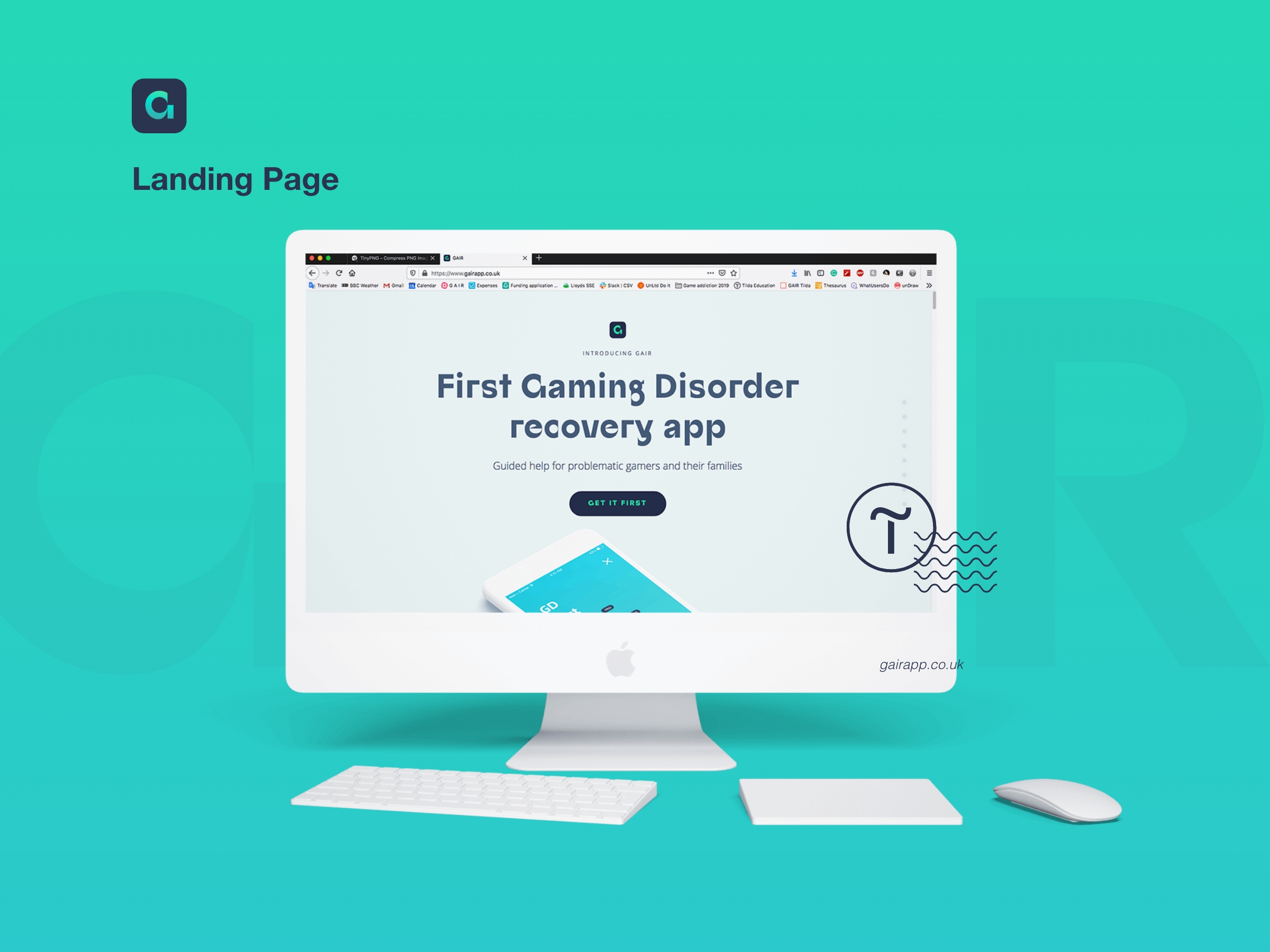
Landing page for GAIR funding applications
I conducted qualitative interviews with gamers, former gamers and psychologists to understand real experiences with excessive gaming. These conversations helped shape the product tone and revealed a core insight: users needed a non judgemental, private way to assess themselves before approaching professional support. Competitor analysis across mobile health apps and addiction tools confirmed the absence of a credible, user friendly solution dedicated to gaming addiction.
A critical part of the solution was ensuring scientific accuracy. I studied academic literature and DSM 5 criteria for Internet Gaming Disorder and collaborated with Dr Pontes, author of the IGD 20 Test. This ensured that the assessment tool was valid, trusted and aligned with established behavioural addiction research.

To structure the product effectively, I created lightweight personas for gamers, family members and health professionals. The MVP focused on the gamer persona. I developed detailed user flows that mapped onboarding, educational content, the identification test, results interpretation and future recovery pathways. This work clarified the overall structure and ensured that each phase supported both awareness and progression.
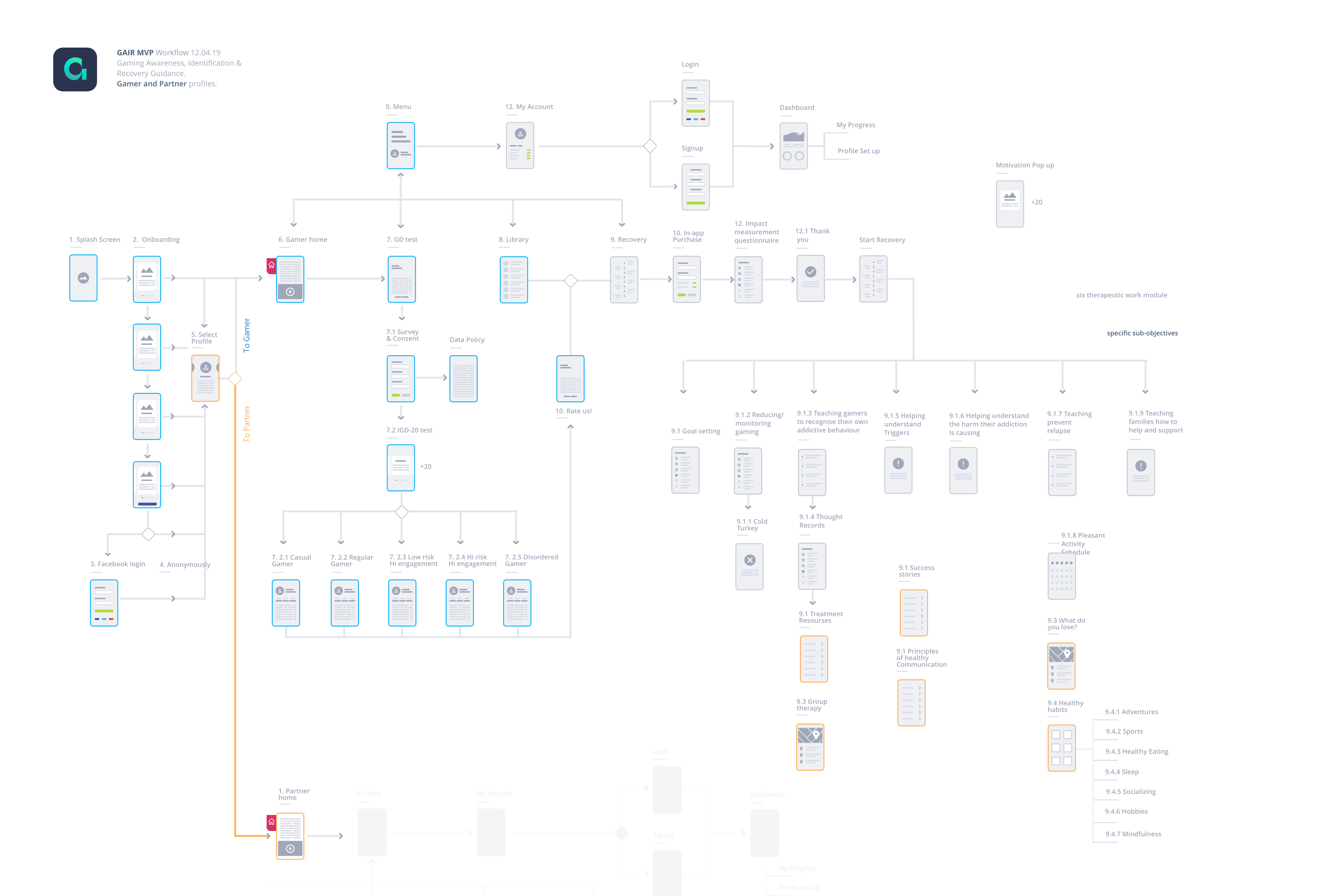
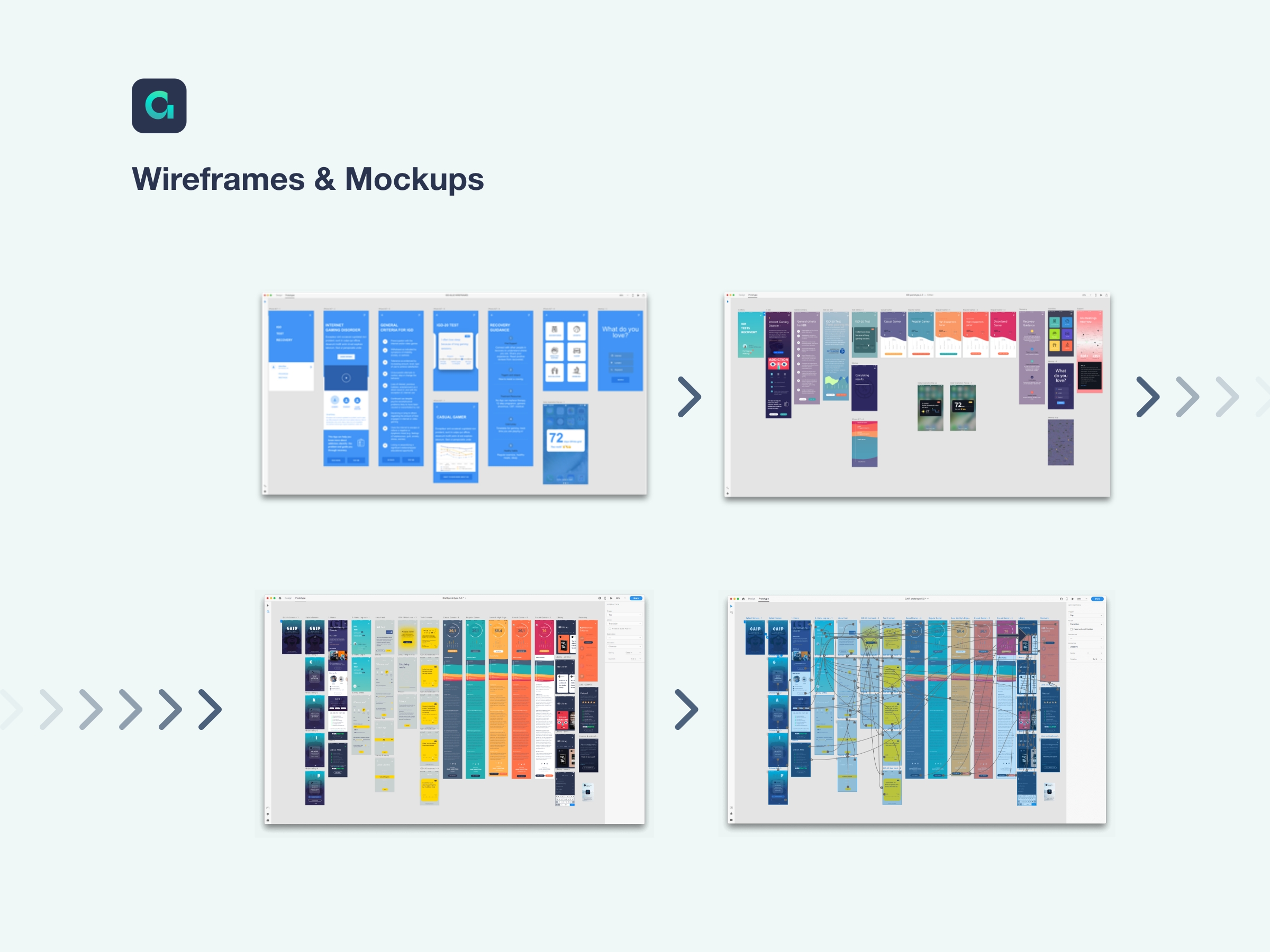
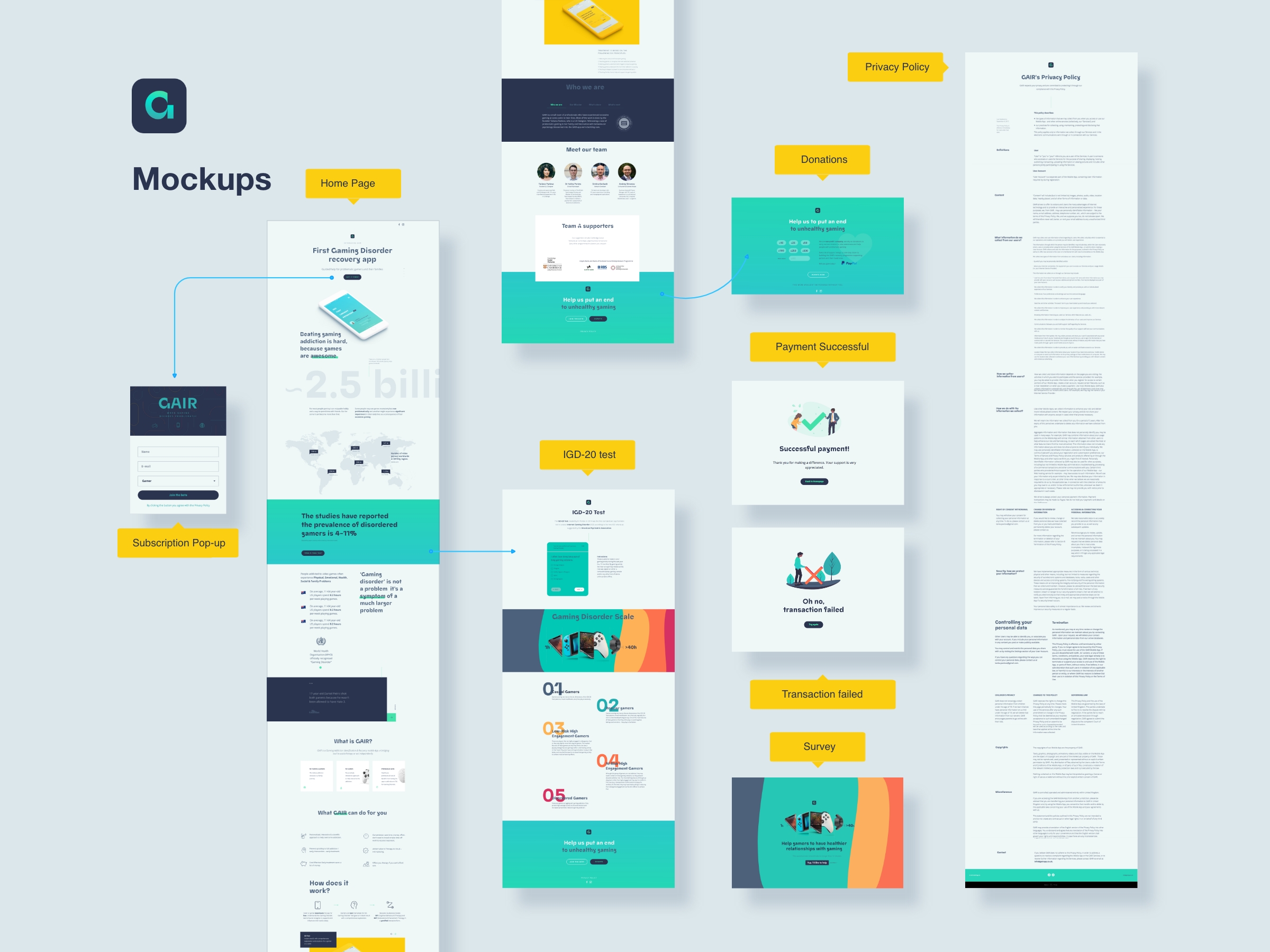
I translated user flows into digital wireframes covering the main menu, IGD criteria, test screens, gamer profiles, results and library content. Early designs were too text heavy, so I introduced image based layouts and card based navigation to simplify complex concepts. The test was refined into swipeable question cards to reduce cognitive load and maintain focus.
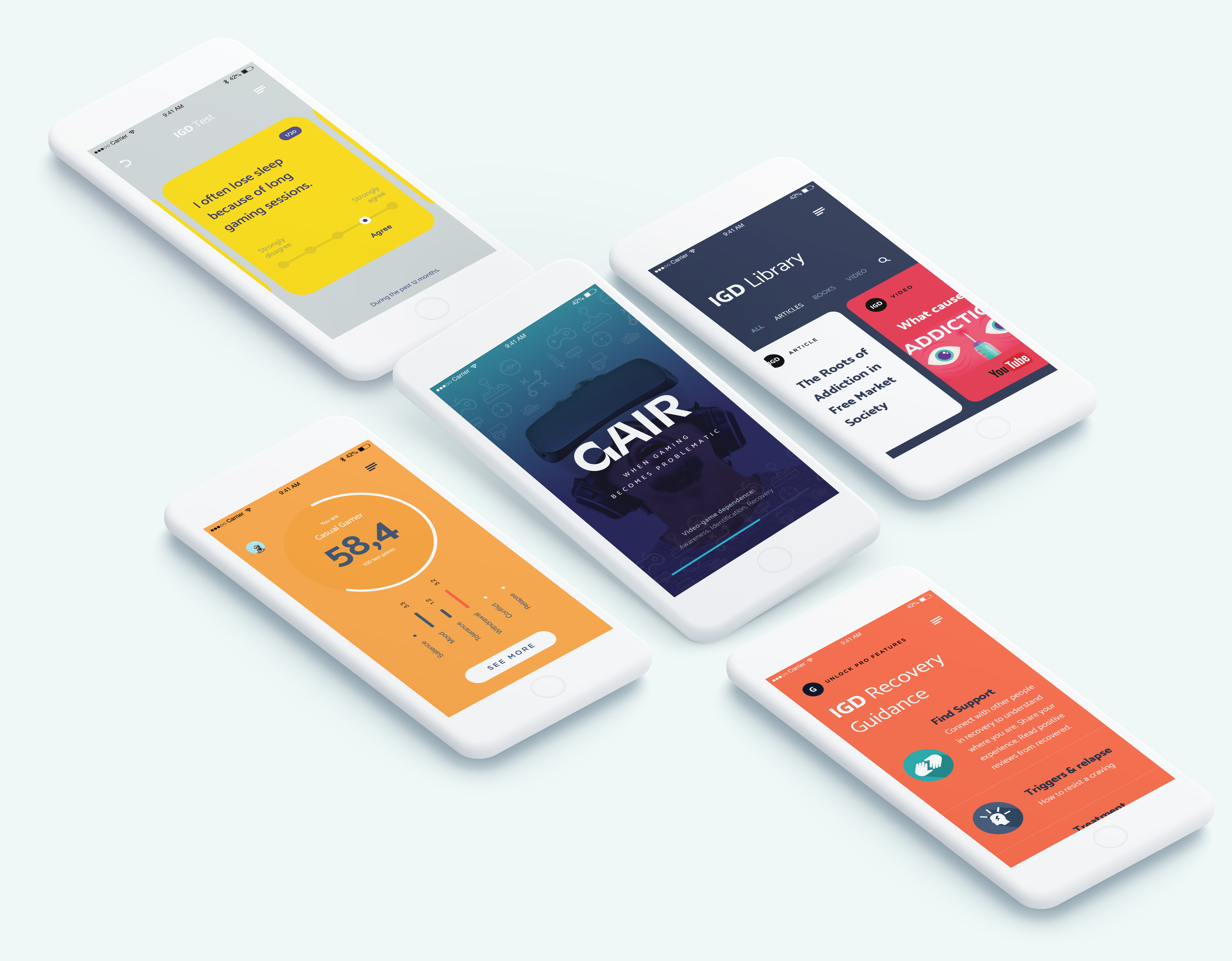
High fidelity mockups in Adobe XD defined the visual identity and interaction patterns for the multi phase product. These included splash screens, onboarding, identification flows, educational modules and early recovery guidance concepts. Feedback during testing revealed that the original name (IGD) felt too clinical and judgemental, so I led a rebrand to GAIR, which was more approachable and better aligned with user expectations.
User testing with gamers highlighted issues such as skipped question handling and unclear rating prompts, which were resolved through iterative design improvements.
Working closely with an iOS developer, I produced detailed design specifications and style guides to support development in Ionic and PWA technologies. I managed the App Store submission process, created visual assets, prepared marketing materials and ensured compliance with privacy and platform guidelines. The launched MVP included the validated IGD 20 Test, onboarding, gamer profiles, basic library content and support for anonymous use.
Alongside the UX process, I developed the GAIR business strategy through accelerator and incubator programmes. This work included value proposition design, user segmentation, revenue modelling, pitch development and multiple grant applications. I also built a public landing page where users could complete the test online and where funders could review the project concept and social impact.
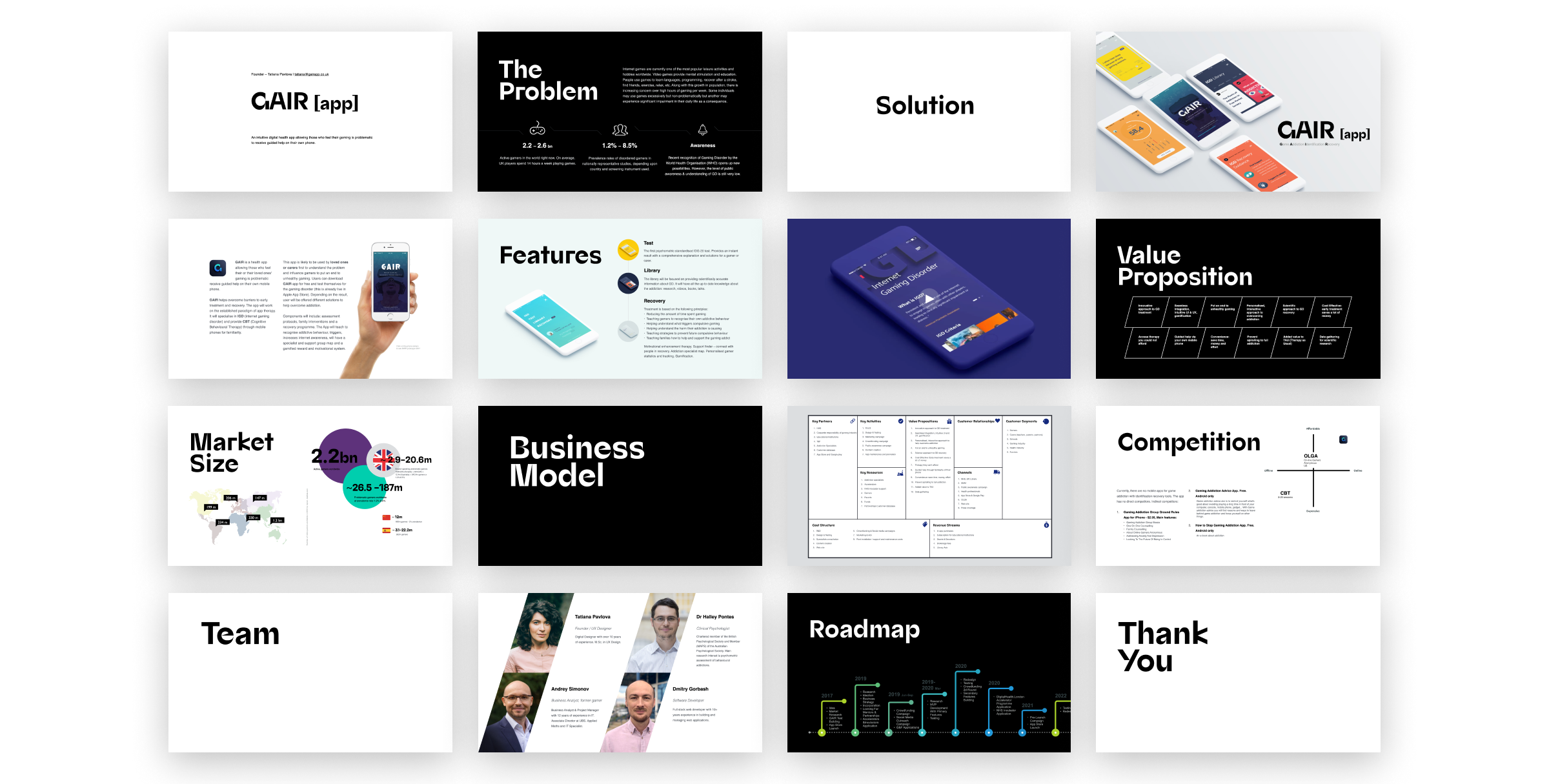
The lean MVP was successfully launched in the App Store, enabling users to privately assess their gaming behaviour using a validated scientific test. The project was accepted into two competitive social enterprise programmes, securing early stage funding and expert mentorship. Although the full recovery guidance product was not developed due to funding challenges and the COVID pandemic, the project validated user need, advanced public awareness and established a credible, research informed foundation for future development. The process strengthened my ability to design for sensitive mental health topics, lead end to end UX work and drive an early stage product from concept to launch.

Next case
You'll want to see this
Website Evaluation and Redesign